
ADAPTIVE COHERENCE
A LOOK AT LEDUM

Habits are hard to break even when we know deep down that we need to change them. Our brains have an amazing ability to find justification for keeping the status quo, as change carries an energy and focus cost that represents a threat to our survival. Even when something that we repeatedly do is obviously harming us, our brain default is often to choose to deal with the devil it knows. Change therefore can feel threatening and feel too hard and stressful until it becomes a new habit; then our brain is content again and stops throwing out warnings. Reliable sources suggest that it takes 64 days for a new behaviour to become a habit. One year ago, I made some big changes in my habits thanks to a series of universal nudges, not least of which was a visit to the School of Homeopathy in Zug, Switzerland, where I met Dr Martine Jus who walked the talk of the totality of homeopathic philosophy, which includes paying attention to our habits and choices. She unwittingly reminded me that I was not being congruent if I was advising clients about their health habits when I was not adopting healthy habits myself. I will be delivering a webinar to the school again next week as a much healthier individual than I was a year ago and I have learnt that by ignoring the brain’s resistance to change chatter there are enormous rewards on the other side. To add insult to injury, once we have new habits fully established, our brains are the first to ask us why we didn’t instruct them to make the changes sooner!
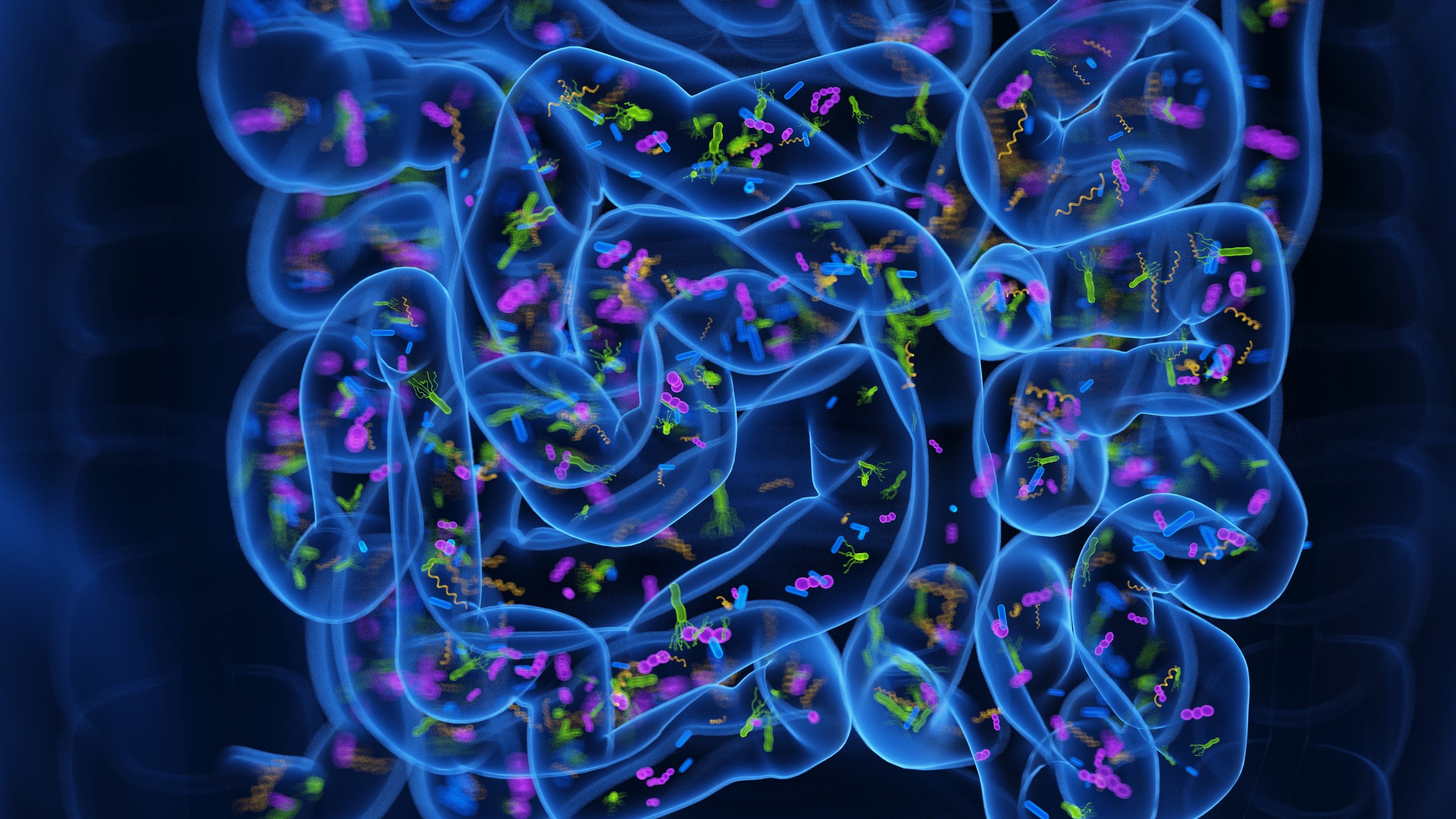
A short article in the latest edition of the IHCAN magazine on a further step change in how we might understand the gut microbiome caught my attention this week. This work introduces the concept of Adaptive Coherence, a framework suggesting that a healthy microbiome is not about maintaining a fixed balanced state but is the capacity for it to intelligently adapt to changes in the gut and host environment. In this ‘new’ model, health is dynamic, fluid and responsive, which is exactly as homeopathic philosophy has been teaching for the last 250 years. Homeopathy has historically regarded disease not as a fixed material entity, but as a dynamic disturbance of the organism’s regulatory intelligence, often referred to by Hahnemann as the “vital force.” Symptoms are not merely defects to suppress; they are expressions of the organism attempting to adapt, compensate, and restore coherence under stress. One branch of homeopathy, the study and use of the bowel nosodes, directly evidenced the dynamic nature of gut microbes in response both to disease and to effective treatment in the mid 1900’s, and yet this work was largely ignored by both the conventional world and by many homeopaths alike.
The microbiome, the vast ecosystem of bacteria, fungi, viruses, and other microorganisms inhabiting the gut and body, is deeply involved in digestion, immunity, metabolism, mood regulation, inflammation, and cognition. For years, researchers attempted to identify the “ideal” microbiome composition, assuming that health depended on maintaining a stable microbial balance. But this approach repeatedly ran into contradictions. People and animals with dramatically different microbiome profiles could both be healthy, while others with apparently “normal” microbial populations could still suffer chronic disease.
Adaptive Coherence proposes a different interpretation. Researchers are now beginning to ask whether an individual’s microbiome can reorganise in response to changing internal and external conditions, while still preserving essential function. Microbial communities exist within constantly shifting environmental conditions shaped by diet, stress, immune signaling, circadian rhythms, emotions, medications, toxins, and countless other variables, so it should not be a surprise that remaining rigidly fixed is unlikely to be the answer to maintaining health.
The analogy used by Sahar El Aidy, Professor of Microbiome Engineering at the University of Amsterdam, is that of an orchestra. If one musician stops playing, the music does not necessarily collapse. The remaining musicians adjust their timing, intensity, and coordination so the performance continues coherently, though perhaps in a modified form. What matters is not the preservation of every individual component, but the maintenance of functional harmony through adaptation. I love this analogy.
This whole idea of Adaptive Coherence is also reflected in the homeopathic understanding of susceptibility. In homeopathic philosophy, disease develops when the organism loses flexibility and becomes unable to respond appropriately to environmental or internal challenges. Symptoms then emerge as patterns of maladaptation. Healing is therefore not simply the elimination of symptoms, but the restoration of adaptive responsiveness. The body is not a machine maintaining rigid equilibrium, but a living ecosystem continuously calibrating amid changing conditions.
In many ways, microbiome science is rediscovering a principle that older holistic traditions intuited long ago: living systems survive not because they remain unchanged, but because they possess the capacity to reorganise intelligently in response to life itself. This will require different approaches to assessing the health of the microbiome to those in current use, as it will no longer be enough to take a single snapshot of the overall composition of the gut microbiome from a single stool sample. Newer approaches might for example look at system level signals indicating the balance between cooperative and competitive interactions between the organisms, rather than simply what organisms are present.
Who knows we might come to the conclusion that we might need dynamic medicine to cure a dynamic issue, sometime in the future !
A LOOK AT LEDUM
I woke up this morning with the homeopathic remedy Ledum on my mind, which is not a normal occurrence even for me! At first I couldn’t understand why it was sticking in my consciousness until I read through the materia medica again, and sure enough I could see how it just might be a very important remedy for a particular case that I am currently dealing with. It is easy to shrink our knowledge of the so called first aid remedies and only resonate with a tiny amount of what they have to offer, so I thought I would share the bigger picture of Ledum with you today.
